
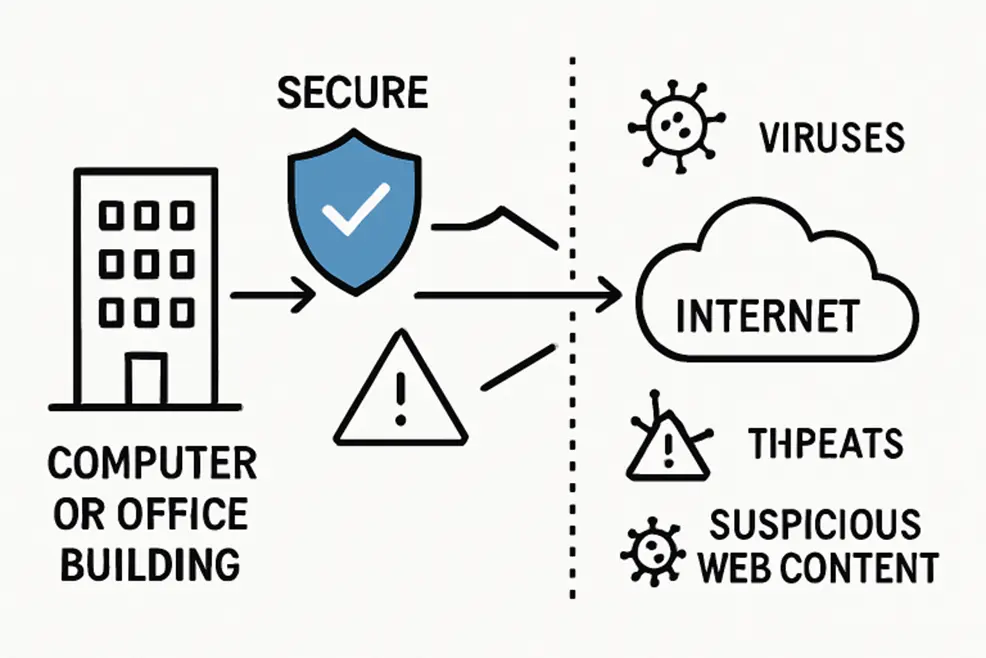
In a rapidly evolving digital landscape, safeguarding workplace data and ensuring safe internet use have become mission-critical priorities. Modern organizations face a range of sophisticated online threats that can compromise sensitive data and disrupt business operations. This makes it essential to protect your organization with our SWG for a resilient, safe, and compliant workplace environment.
Secure Web Gateways (SWGs) stand at the frontline of defense, meticulously filtering web traffic, blocking harmful sites, and maintaining robust security controls. They are more than just security tools; they enable productivity enhancements and compliance assurance, making them a core pillar of enterprise cybersecurity strategies.
Employees and remote users access critical systems from an increasingly diverse range of devices and locations. As organizations accelerate cloud adoption and hybrid work, traditional defenses can’t keep up with fast-moving cyber threats. Businesses increasingly rely on SWGs not only to enforce policies consistently but also to detect and prevent advanced web-based attacks across all endpoints.
With digital threats on the rise, industry leaders frequently turn to resources like TechRadar to stay informed about why SWGs are an essential safeguard for today’s workplace.
Introduction
Organizations across sectors have adopted cloud platforms and digital collaboration tools to power new ways of working. As employees leverage these tools on a multitude of devices and networks, the risks associated with open internet access have multiplied. Traditional firewalls or endpoint security alone are often insufficient against evolving threats, such as phishing, ransomware, and data exfiltration attempts.
Secure Web Gateways (SWGs) address this issue by serving as a security checkpoint between users and the web, scrutinizing every data packet, whether at headquarters, in branch offices, or at remote work locations. Their centralized management capabilities allow for rapid adaptation to the latest threats and policies, empowering businesses to maintain a secure digital posture at scale.
What Are Secure Web Gateways?
Secure Web Gateways are cybersecurity solutions designed to shield organizations from unsafe or inappropriate internet content by regulating all web-bound traffic. Acting as an intermediary between users and the open internet, SWGs check for risks in web requests and responses using URL filtering, malware protection, and content inspection. These gateways can be delivered as cloud services, software, or hardware appliances, depending on organizational needs.
Whether implementing a physical device on-premises, utilizing virtual appliances, or opting for a cloud-based SWG, businesses employ these solutions to maintain effective control over internet-bound communications. This approach helps meet both regulatory and operational security standards, as described in leading security analyses by Gartner.
Key Features of SWGs
- URL Filtering: Efficiently blocks access to unsafe or unauthorized websites, supporting compliance and reducing exposure to online threats.
- Malware and Threat Protection: Detects, blocks, and remediates malicious downloads, sites, and code—especially vital for stopping ransomware and zero-day exploits.
- Application Control: Manages web and cloud app usage, limiting exposure to shadow IT risks and maintaining control over which services are available in the workplace.
- SSL/TLS Inspection: Inspects encrypted web traffic to prevent advanced threats concealed within secure sessions, allowing organizations to spot hidden risks.
- Data Loss Prevention (DLP): Monitors web traffic for sensitive data transfers, controlling and logging data flows to minimize the risk of breaches or inadvertent leaks.
Benefits of Implementing SWGs
- Enhanced Security: Blocks threats before they can impact end users or systems. By analyzing all network traffic, SWGs reduce malware infections and exposure to malicious sites.
- Compliance Support: Ensures adherence to sectoral critical ones, such as GDPR, HIPAA, or SOX, by delivering audit logging, access controls, and data inspection capabilities.
- Consistent Security for Remote Users: Offers reliable protection for employees working remotely or on unmanaged networks by enforcing policies wherever users connect, ensuring seamless security across all connections.
- Challenge Policy Enforcement: Ensures administrators can manage web access rules company-wide, minimizing human error and gaps in enforcement.
- Reduced Infrastructure and Operational Overhead: Particularly with cloud SWGs, organizations benefit from scalable security while avoiding the cost and complexity of maintaining physical appliances.
Deployment Options
- On-Premises SWGs: Offer direct oversight and data processing on company-managed infrastructure. This option supports industries with strict data residency or customization demands.
- Cloud-Based SWGs: Deliver security as a service for fast deployment, high scalability, and simplified management. Cloud Security Gateways (Cloud SWGs) are often ideal for enterprises supporting remote or hybrid workforces.
- Hybrid SWG Solutions: Combine the strengths of on-premises and cloud models, enabling businesses to tailor deployments to challenging environments or transitional needs.
Challenges and Considerations
Despite their clear benefits, organizations implementing SWGs must prepare for important operational considerations:
- Performance Impact: Deep packet inspection and SSL/TLS decryption can introduce network latency, necessitating a careful balance between protection and user experience.
- Complexity of Management: Policies and rules across distributed locations can be difficult to coordinate without centralized tools and well-trained admins.
- Cost Considerations: Licensing, deployment, and skilled personnel costs should be considered against the tangible reduction in incident response and regulatory penalties.
Conclusion
In today’s digital-first workplace, organizations face a constantly expanding and sophisticated threat landscape that demands advanced security measures. Secure Web Gateways (SWGs) serve as a critical line of defense, providing comprehensive protection by monitoring and filtering web traffic, detecting malware and phishing attempts, and enforcing corporate security policies in real time. By implementing effective SWG solutions, businesses can prevent unauthorized access, reduce the risk of data breaches, and ensure compliance with industry regulations. Beyond security, these tools help maintain workforce productivity by allowing safe access to necessary resources. As remote work and cloud adoption continue to grow, SWGs offer scalable, adaptable protection that evolves with the modern enterprise.
Also READ-Smart Home Healing After Surgery: Tools, Tech And Gentle Support