
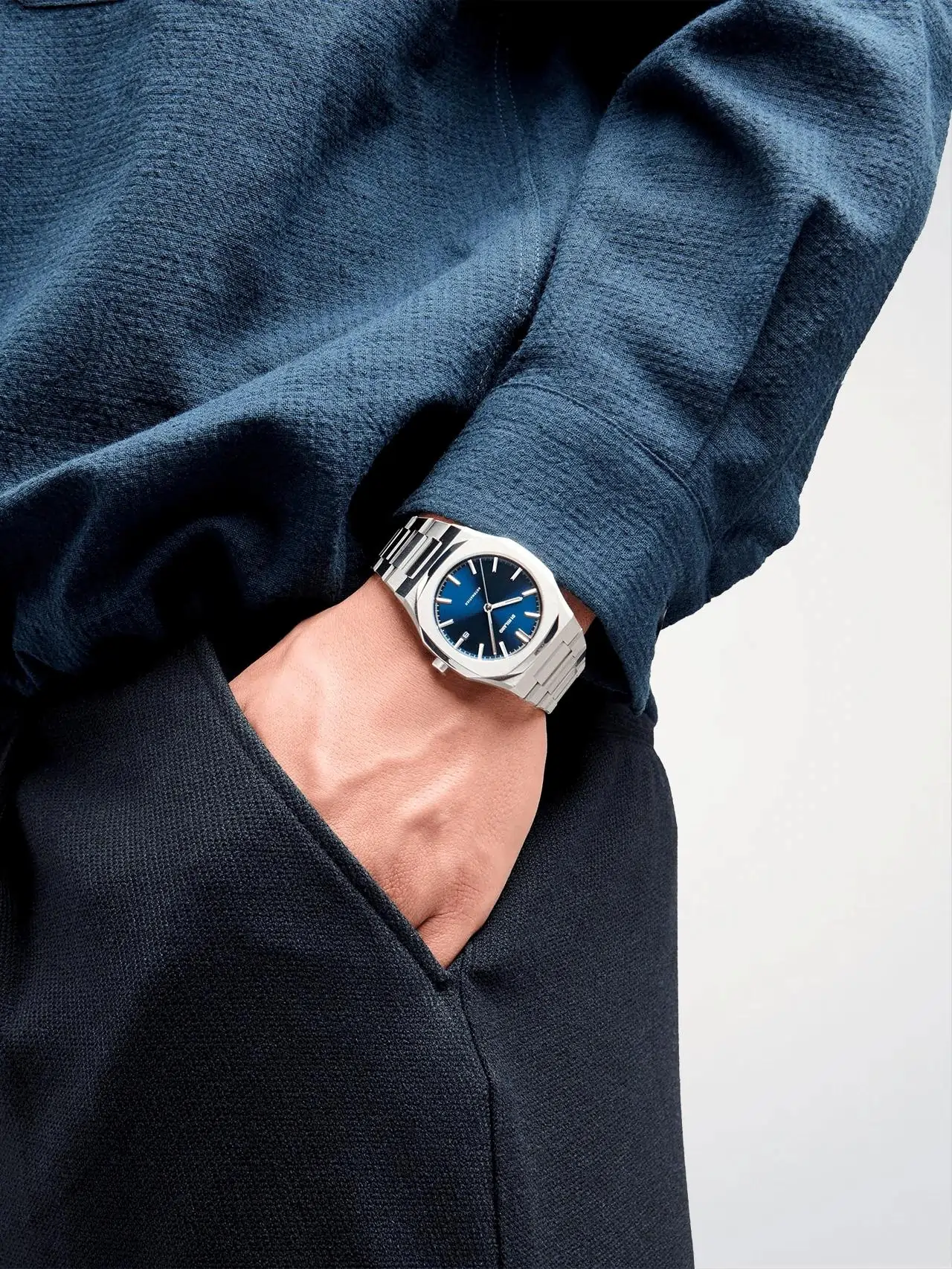
In the world of high-performance gear, there is a distinct thrill that comes from mechanical transparency. Whether it is the roar of a naturally aspirated engine or the visible gears of a precision-engineered machine, the modern man gravitates toward objects that reveal their inner workings.
The current shift in men’s style isn’t about adding more digital screens to our lives; it’s about returning to the tactile satisfaction of men’s watches by D1 Milano that function as masterpieces of micro-engineering. For the urbanite who values structural design over disposable tech, the focus has moved beneath the dial to the self-sustaining power found in automatic watches for men. This resurgence is a celebration of kinetic energy, where a closed system of springs and gears functions independently of batteries or software updates.
The Mechanics of Kinetic Independence
At the heart of a serious collection is the mechanical movement. Unlike quartz pieces that rely on a synthetic power source, an automatic caliber utilizes a weighted rotor that spins with the natural motion of the wearer’s arm. This energy is transferred to a mainspring, which stores the power and releases it with microscopic precision.
- Self-Sustaining Power: As long as you are moving, the watch is living. It creates a symbiotic relationship between the machine and the owner.
- The Sweeping Motion: One of the most recognizable marks of a high-quality mechanical engine is the smooth sweep of the seconds hand, a stark contrast to the staccato “tick” of a battery-operated device.
- Longevity: While digital sensors eventually fail, a well-maintained mechanical movement can theoretically run for a century.
Architectural Case Design: Protecting the Caliber
An engine is only as good as the chassis that holds it. In contemporary watchmaking, the focus has shifted toward geometric silhouettes that mirror modern skyscrapers and industrial design. The transition from rounded, traditional cases to sharp, octagonal edges has redefined the aesthetic of the wrist.
The use of materials like 316L stainless steel, often finished with a combination of vertical brushing and mirror-polished chamfers, creates a play of light that highlights the watch’s structural integrity. This architectural approach ensures that the timepiece isn’t just a tool, but a piece of industrial art. The integrated bracelet—where the lugs flow seamlessly into the links—further emphasizes this “Total Look,” providing a balanced weight that feels substantial and purposeful.
The Rise of the Exhibition Caseback
For many enthusiasts, the true satisfaction comes from the “flip.” Modern design frequently incorporates an exhibition caseback—a sapphire crystal window on the underside of the watch. This allows the wearer to witness the heartbeat of the timepiece: the balance wheel oscillating at thousands of vibrations per hour and the rotor spinning with every gesture.
This transparency has turned horology into a conversational hobby. It is no longer about showing off a label; it is about discussing the beat rate, the power reserve, and the finishing of the movement. It appeals to the same mindset that enjoys looking under the hood of a restored classic car or admiring the internals of a high-end audio amplifier.
Scaling the Modern Accessory Game
Building a collection in today’s market requires a balance between bold aesthetics and technical reliability. When selecting a primary timepiece, the modern man looks for versatility that can bridge the gap between a tech-focused workspace and an upscale social environment.
- Monochromatic Mastery: All-black PVD coatings or raw steel finishes provide a stealthy, “tactical” look that pairs perfectly with urban streetwear.
- The “Hidden” Details: Look for designs that utilize anti-reflective coatings on sapphire glass, ensuring the complex dial remains visible even under harsh city lights.
- Proportional Harmony: With the shift toward “Neo-Vintage” sizing, cases between 37mm and 40mm have become the sweet spot, offering presence without unnecessary bulk.
A Statement of Intentionality
Choosing a mechanical piece over a digital wearable is a statement of intentionality. It shows an appreciation for the “slow” craft in a fast world. It is about choosing a device that does one thing—tracking the most valuable resource, time—with absolute mechanical honesty.
As the movement revolution continues to gain momentum, the focus remains on the marriage of high-design silhouettes and the raw, unyielding power of the automatic caliber. It is a return to form, where the engine is the hero, and the wrist is the ultimate gallery for modern engineering.
Read more: Switching from Slots to Baccarat: Key Adjustments and Classic Mistakes to Avoid
Driving Quality Website Traffic: Integrating Social Media with SEO for Better Conversions
Why Spotify Metrics Matter More Than Ever for Algorithmic Growth in 2026