
Increasing environmental concerns and the urgent need for resource conservation have prompted the commercial plumbing industry to adopt sustainable practices at an unprecedented pace. As issues such as climate change, water scarcity, and rising utility costs become central considerations for organizations, businesses worldwide now recognize the interconnected benefits of implementing eco-friendly plumbing systems. Not only do such solutions support broader corporate social responsibility goals, but they also monitor and control temperatures remotely and significantly enhance a company’s public image. Many industry suppliers, such as Cruco Mill & Industrial Supply, play a pivotal role in this green transition, offering innovative products and technical resources that enable facility managers to make environmentally responsible choices while meeting stringent regulatory obligations.
The movement towards greener plumbing is far more than a mere trend; it is becoming integral to the long-term business strategy of many commercial property owners. Sustainable practices aid environmental stewardship by conserving resources, reducing waste, and lowering greenhouse gas emissions associated with water and energy usage. At the same time, these improvements deliver measurable cost reductions and enhance efficiency for both new and existing commercial properties. Innovations such as advanced monitoring, water-efficient fixtures, and alternative water sources are driven by a mix of tightening environmental regulations, government incentives, and an increasingly informed consumer base that values responsible business operations. Companies that embrace these changes position themselves as industry leaders, gaining a competitive advantage in the marketplace.
Smart Plumbing Technologies
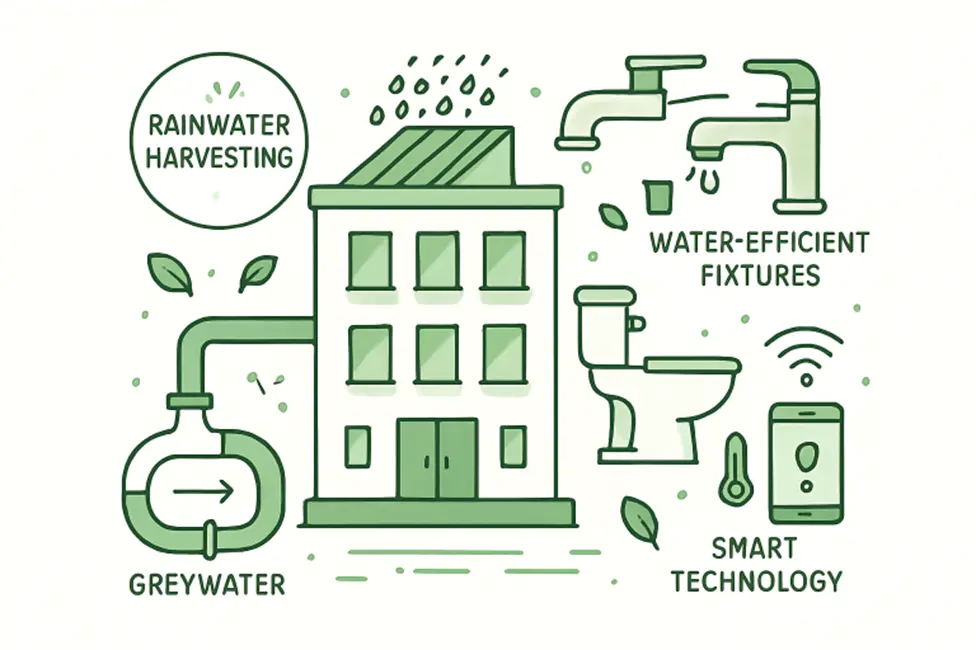
The rise of smart plumbing technology is revolutionizing how commercial spaces manage water and energy. Advanced sensor systems equipped with real-time leak detection can immediately identify even the smallest leaks in a plumbing infrastructure, minimizing water loss and reducing the risk of costly structural damage that unchecked leaks can cause. The integration of Wi-Fi-enabled water heaters and recirculation pumps enables property managers to remotely monitor and control temperatures, schedule heating cycles to match occupancy patterns, and receive alerts for unusual activity, enabling immediate responsiveness to system needs. These digital tools don’t just enable convenience; they empower facility managers with actionable, data-driven insights that support proactive maintenance, optimize water use, and extend the lifespan of plumbing assets. As noted by the Environmental Protection Agency (EPA), integrating smart devices is a critical step towards significantly improving water use efficiency and overall building sustainability. As these technologies become more accessible, more businesses are investing in smart plumbing to future-proof their properties while advancing sustainability commitments.
Water-Efficient Fixtures
Switching to water-efficient fixtures is one of the simplest and most cost-effective ways to reduce water consumption in commercial plumbing systems. Low-flow toilets, for example, can use less than half the water of older, conventional models, sometimes as little as 1.28 gallons per flush compared to old toilets that require 3.5 gallons or more. Similarly, modern urinals equipped with waterless or low-flow technology and advanced sensor-activated faucets are engineered to deliver reliable performance in high-traffic settings while drastically reducing water waste. In spaces such as hotels, office buildings, and shopping centers, the cumulative effect of these upgrades can be substantial, enabling enterprises to achieve lower water bills and a meaningful reduction in their environmental impact. There are also considerable side benefits, such as reduced risk of water damage and the potential to meet green building certification requirements. Many businesses have reported rapid returns on investment after installing WaterSense-labeled fixtures, especially when these projects are combined with existing renovations or asset replacements.
Greywater Recycling Systems
Greywater recycling systems are gaining significant traction as a practical sustainability measure in large commercial properties. These systems capture “gently used” water from sinks, showers, and laundry equipment, then treat and repurpose it for non-potable applications such as toilet flushing and landscape irrigation. Depending on building use and greywater sources, this approach can lead to a 30-50% reduction in overall commercial water consumption. Reducing reliance on city water supplies not only curbs utility costs but also relieves stress on municipal infrastructure, particularly in areas facing rapid population growth or prolonged drought. Many city planners have begun incorporating greywater recycling into codes for new developments, and pilot initiatives using these systems are expanding in metropolitan regions around the world. Frequently, businesses that adopt greywater recycling solutions benefit from local or state-level financial incentives and rebates, which offset installation costs and further enhance the value proposition. For example, hotels and hospitals often see immediate savings by reusing greywater for landscape irrigation systems and high-usage restroom facilities. For businesses with a strong commitment to sustainability, investing in a greywater system reflects both environmental responsibility and economic foresight. Further reading on water reuse technologies is available from the New York Times coverage on water conservation advancements.
Rainwater Harvesting
Rainwater harvesting, collecting precipitation from rooftops and other non-polluting surfaces for later use, is a time-tested but increasingly modernized method for sustainable facility management. Collected rainwater can be stored in above or below-ground tanks and used for landscape irrigation, cooling systems, and even for toilet flushing or in some industrial applications, provided the water undergoes appropriate filtration and treatment. This method has numerous advantages for commercial facilities, especially in regions that experience frequent droughts or face strict municipal water restrictions. Not only does rainwater harvesting help facilities manage stormwater runoff and reduce the risk of flooding, but it can also assist organizations in complying with stringent local regulations related to stormwater quality and green infrastructure requirements. By supplementing main water sources with harvested rainwater, companies can continue to maintain green spaces, support cooling operations, and ensure building continuity even during times of municipal shortages or increased water rates. Additionally, rainwater harvesting systems, particularly when integrated with smart irrigation controls and weather forecasting, can lead to more precise and efficient use of both natural and municipal water supplies over the long run.
Sustainable Piping Materials
The selection of piping and fixture materials is a crucial component of sustainable plumbing. In recent years, eco-friendly piping options such as cross-linked polyethylene (PEX) and chlorinated polyvinyl chloride (CPVC) have increasingly replaced traditional metal piping materials like copper and galvanized steel. These alternatives are highly durable, require fewer resources during production, and have a lower carbon footprint over their lifecycles. PEX and CPVC piping require less energy to manufacture and transport, are corrosion-resistant, and tend to be easier to install, helping lower both labor and maintenance costs for commercial projects. The impressive longevity of these materials means fewer replacements and repairs, creating less waste bound for landfills. Their flexibility and versatility also make them well-suited for retrofitting older buildings or designing new, high-efficiency complexes that meet or exceed green building standards. With growing focus on minimizing environmental impact at every stage of construction and operation, sustainable piping materials stand at the forefront of the industry’s evolution.
Government Incentives
To stimulate broader adoption of sustainable plumbing practices, federal, state, and local governments have introduced a range of tax credits, rebates, grants, and technical assistance programs. These incentives are designed to encourage investment in new systems and retrofits by offsetting upfront installation and engineering costs. For example, the Federal Energy Efficient Home Improvement Credit applies to certain plumbing upgrades, such as high-efficiency water heaters and leak detection systems, that promote energy and water savings. Some municipalities go further, offering additional rebates for installing fixtures certified under the EPA WaterSense program or for implementing rainwater harvesting and greywater recycling systems. Utility companies in drought-prone areas often run incentive programs that help property owners capture water savings while benefiting from reduced monthly utility bills. These financial incentives, combined with the long-term savings from sustainable systems, substantially strengthen the business case for going green. Detailed guidance on available incentives can be found via the U.S. Department of Energy’s resource portal for energy-efficient building improvements.
Conclusion
The advancement of sustainable trends in commercial plumbing presents an unprecedented opportunity for businesses to blend environmental accountability with operational efficiency. By adopting a combination of smart technologies, water-saving fixtures, recycling systems, rainwater-harvesting techniques, and sustainable building materials, today’s enterprises are making significant progress toward a greener future. These practices not only deliver ongoing savings and compliance with relevant codes and standards, but they also contribute to the long-term viability of our shared water and energy resources. As demand grows for responsible business practices and eco-friendly building solutions, early adopters in the commercial plumbing industry will continue to lead the way, proving that sustainability and profitability can go hand in hand.
Also Read