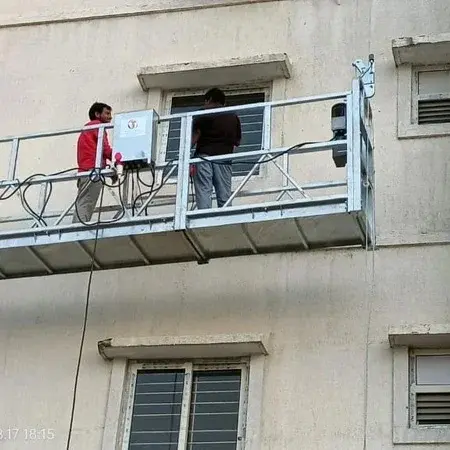
Every construction project, from a residential renovation to a skyscraper, relies on a fundamental principle: stability. When workers are operating thirty, fifty, or a hundred feet in the air, the ground beneath their feet—or rather, the lack of it—becomes the most critical safety factor. Choosing the right access equipment isn’t just a logistical decision; it’s a commitment to the safety of the crew and the efficiency of the timeline.
Access platforms have evolved significantly over the decades. What used to be a simple assembly of wood and nails has transformed into a sophisticated industry of engineered steel, hydraulics, and modular systems. For project managers and site supervisors, understanding the variety of reliable platforms available is essential for keeping a project on track and under budget.
The Backbone of Vertical Construction
The primary function of any access platform is to provide a safe, stable working surface at height. However, “reliability” in this context goes beyond just structural integrity. A reliable platform is one that fits the specific needs of the job, is easy to assemble or deploy, and withstands the rigors of the environment.
Using the wrong equipment can lead to bottlenecks. Imagine a painter trying to cover the entire facade of a warehouse using only a ladder. It’s technically possible, but the time lost in repositioning makes it inefficient. Conversely, setting up a massive fixed structure for a two-hour repair job is a waste of resources. The key is matching the platform to the task.
Types of Reliable Access Solutions
The market offers several categories of access platforms, each designed to solve specific problems.
Supported Scaffolding Systems
For long-term projects requiring heavy lifting and multiple workers, supported scaffolding remains the gold standard. These systems are built from the ground up and offer the highest weight capacities.
For large-scale projects like refineries, power plants, or major infrastructure repairs, industrial scaffolding provides the robust framework necessary to support heavy loads, equipment, and multiple workers simultaneously. Unlike lighter residential setups, these systems are engineered to withstand extreme vibrations, heavy winds, and the constant traffic of a busy industrial site. They are modular, allowing them to be shaped around complex piping or irregular building geometries.
Mobile Elevating Work Platforms (MEWPs)
When speed and flexibility are the priorities, Mobile Elevating Work Platforms (MEWPs) are often the preferred choice. This category includes scissor lifts and boom lifts.
- Scissor Lifts: These provide a vertical platform that can hold personnel and materials. They are exceptionally stable and offer a larger workspace than a bucket, but they generally only move up and down. They are ideal for ceiling work, cladding installation, or maintenance tasks where the vehicle can be positioned directly underneath the work area.
- Boom Lifts: These offer outreach as well as height. If a worker needs to access a spot “up and over” an obstacle—like reaching a window above a flowerbed or a pipe rack—a boom lift is the solution. They provide incredible versatility but typically have lower weight capacities than scissor lifts.
Mast Climbing Work Platforms (MCWPs)
Mast climbers are a hybrid solution often used in masonry and facade work. A work platform travels up and down a vertical mast. The benefit here is ergonomics and speed. Masonry is heavy, and constantly lifting bricks or stone to different scaffold levels is exhausting. A mast climber allows the platform to sit exactly where the mason needs it, moving up inch by inch as the wall grows. This reduces strain on workers and significantly speeds up production.
Key Factors in Choosing the Right Platform
Selecting a reliable platform involves analyzing the site constraints and the nature of the work.
Load Capacity and Platform Size
The first question should always be: “What are we lifting?” If the job involves heavy welding gear, stacks of bricks, or three workers at once, the platform must be rated for that load. Overloading is a primary cause of platform failure. Industrial scaffolding and heavy-duty mast climbers generally offer the highest capacities, whereas boom lifts are more restrictive.
Height and Reach
Vertical height is obvious, but horizontal reach is often overlooked. If the base of the structure is blocked by landscaping, excavation trenches, or other machinery, a vertical lift won’t work. A reliable boom lift with an articulating arm allows operators to bypass these obstacles safely.
Terrain and Environment
Is the ground a polished concrete slab or a muddy field? Scissor lifts designed for indoor use have hard, non-marking tires that will get stuck instantly in mud. Rough-terrain lifts come with four-wheel drive and outriggers to stabilize the vehicle on uneven ground. Using indoor equipment outside is a recipe for a tip-over accident.
Prioritizing Maintenance and Inspection
Even the most robust equipment is only reliable if it is well-maintained. Mechanical failure at height is a terrifying prospect. Reliability comes from a strict regimen of inspection.
Daily walk-around inspections should be mandatory. Operators need to check hydraulic lines for leaks, ensure tires are properly inflated, and verify that emergency descent systems are functional. For static structures like scaffolding, inspections must happen after every shift in weather conditions. High winds or heavy rains can loosen couplers or shift base plates, compromising the entire structure.
Elevating Project Success
The right access solution does more than just get a worker to the roof; it acts as a force multiplier for the entire crew. When workers feel safe and have room to maneuver, their productivity increases. When the equipment functions reliably without breakdowns, the schedule stays intact.
Whether the job calls for the agility of a boom lift or the sheer strength of heavy-duty scaffolding, taking the time to select the correct platform is the hallmark of a professional operation. In an industry where margins are tight and deadlines are tighter, reliability is the ultimate asset.
Also Read-Why is Student Interest in Tech High?