Introduction
Choosing the right roofing material is a crucial decision for homeowners, especially in regions prone to shifting or extreme weather. For residents in the Northeast and similar regions, turning to a trusted Auburn, ME roofing company ensures your roof is tailored to local climate conditions. More than simply an aesthetic element, the roof plays an essential role in a home’s longevity and energy efficiency, directly shaped by its surrounding climate.
Local weather conditions, such as prolonged heat, frigid winters, and increased storm frequency, can damage roofs and reduce their effectiveness over time. As a result, understanding how climate affects roofing choices is critical for lasting protection and comfort. Homeowners must weigh durability, moisture resistance, and energy efficiency when evaluating roofing solutions for their environment.
Whether you reside in a region with regular snowfall or you experience sweltering summers, roofing technology and materials continue to evolve. The need for resilient, adaptive designs is now more pressing than ever, and innovative roofing approaches can reduce both repair costs and environmental impact.
Furthermore, recent trends in construction emphasize the importance of environmental considerations and energy performance in both new builds and roof replacements. By leveraging advancements in sustainable materials and adaptive systems, homeowners can increase their property’s value while achieving peace of mind during severe weather events.
Impact of Temperature Extremes
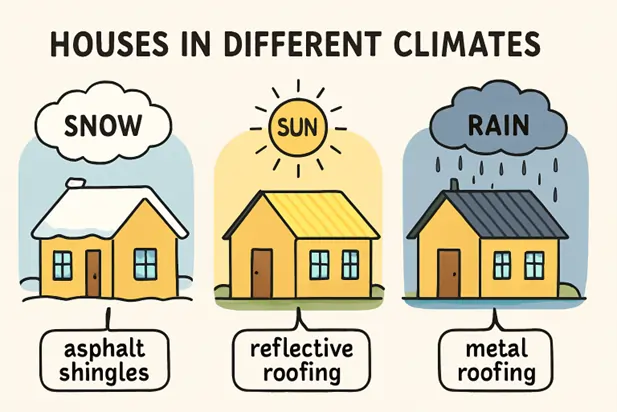
Temperature swings and extremes, including both summer heat and winter cold, exert significant pressure on roofing materials. In regions with hot summers, traditional dark-colored shingles can absorb sunlight, raising attic temperatures and increasing cooling costs. Instead, light-colored or specially engineered cool roofing products, such as reflective metal roofing, can deflect solar radiation and help lower indoor temperatures. According to the U.S. Department of Energy, cool roofs can reduce energy use and improve occupant comfort, especially in hot climates.
Cold climates require a different approach. Roofing products must withstand freeze-thaw cycles, which can cause cracking and water penetration. Durable materials like metal or slate are better suited for withstanding such cycles because of their resistance to cracking and structural degradation. Additionally, proper insulation and ventilation within roof assemblies help prevent the buildup of ice dams, reducing the risk of water intrusion and subsequent damage.
Resilience to Extreme Weather Events
As climate change increases the frequency and intensity of severe storms, selecting impact-resistant and well-fastened roofing systems becomes essential. Storm-prone regions, such as those vulnerable to hurricanes or tornadoes, benefit from roofs made with metal panels, reinforced asphalt shingles, or heavy concrete tiles. Secure attachment systems, including hurricane clips and roof straps, are particularly vital in minimizing roof blow-off during high-wind events.
Additionally, strict local building codes in coastal areas often dictate minimum standards for wind resistance and water protection. Investing in a robust roofing system now can help homeowners avoid costly repairs and protect their property from the growing risks posed by climate-driven weather disasters. This proactive approach also aligns with recommendations from disaster resilience organizations such as FEMA.
Managing Moisture and Humidity
Persistent humidity and frequent rainfall can foster mold growth and rot if roofing materials absorb moisture or fail to provide proper drainage. In particularly wet climates, roofs should be constructed with materials such as rubber membranes, concrete, or treated metals that effectively repel water. The integration of waterproof barriers beneath shingles or tiles further protects roof decks from becoming saturated.
Green roofs are another innovative solution for managing rainwater. These living roofs incorporate soil and hardy plants, absorbing water, filtering pollutants, and reducing stormwater runoff that could overwhelm municipal systems. By gradually releasing retained water through natural evaporation, green roofs improve urban air quality and enhance a building’s insulation properties.
Energy Efficiency Considerations
Energy performance is now a top priority for many homeowners, as utility costs continue to rise and awareness of carbon emissions grows. Reflective roofing products, such as ENERGY STAR-rated shingles or coatings, help limit heat absorption and keep homes cooler in summer. Efficient attic ventilation works alongside these materials to expel trapped heat and moisture, ensuring indoor spaces remain comfortable year-round.
Modern roofing underlayments and insulation systems provide additional thermal resistance, minimizing heat loss in winter and heat gain in summer. Replacing older roofs with these thoughtful upgrades can yield immediate reductions in heating and cooling bills, while also supporting sustainability objectives. Publications like Consumer Reports recommend choosing roofing materials and underlayments with a proven track record of enhancing a home’s energy envelope.
Adaptability to Climate Change
As global weather patterns shift and unexpected extremes become more common, adaptable roofing solutions offer a way to future-proof homes. Modular systems, in which sections of roofing can be easily swapped or upgraded, allow homeowners to adjust drainage, insulation, or fastening strength as the climate evolves. These systems can be especially valuable for properties in regions already seeing increased precipitation or changing seasonal weather patterns.
The market for climate-adaptive roofing continues to grow, with options ranging from reinforced fastening systems to solar-integrated roofing tiles that generate clean energy. By investing in modular or upgradable roof solutions, homeowners can respond quickly to regulatory changes or environmental risks, keeping their homes protected for years to come.
Final Thoughts
Understanding how local climate conditions influence roofing choices empowers homeowners to protect their investment and promote long-term comfort. By selecting regionally appropriate materials and designs and working with experts familiar with local requirements, homeowners can ensure their roofs deliver both performance and peace of mind. Adapting to current climate realities is not just smart, it is necessary for safeguarding homes against a future of unpredictable weather
Read more: Efficient Home Hot Water Solutions for Modern Living
The Engine on Your Wrist: A Deep Dive into the Movement Revolution
Switching from Slots to Baccarat: Key Adjustments and Classic Mistakes to Avoid