
The House Edge Is Never Visible But Decides How Long Your Money Lasts
The Quiet Number That Shapes Every Casino Game
Every casino game, whether played under chandeliers in Las Vegas or on your phone at midnight, carries a quiet companion. It never shows up on the table felt, it never flashes on the reels, and yet it is always there. That invisible figure is the house edge.
Some players treat it like the villain of the story. The number that exists only to drain wallets and crush hot streaks. But the truth is far less dramatic and far more useful. When you actually understand what the house edge means, it becomes less of a monster and more of a map. It shows you where risk lives, how long your bankroll might last, and which games quietly tilt the odds in your favor.
Once you know how to read it, you stop guessing and start choosing.
What Is a House Edge?
The house edge is not a trick. It is not a secret algorithm designed to target your account. It is simply the built-in mathematical advantage that keeps casinos profitable over time. Every casino game is designed so that, on average, the house keeps a small portion of every wager. Sometimes that portion is tiny. Sometimes it is not. But across thousands of spins, hands, and rolls, the numbers always settle where the math says they should.
Think of it less as a penalty and more as a service fee for entertainment. Casinos provide the games, the dealers, the software, the payments, the promotions, and the infrastructure. The house edge is how they pay the bills.
Short-term results can still swing wildly. Players win jackpots. Streaks happen. But over time, the edge quietly does its job.
Is House Edge the Same as RTP?
These two numbers are closely related, but they describe the game from opposite sides.
RTP, or Return to Player, shows what percentage of wagers is expected to go back to players over long periods of play. The house edge shows what the casino expects to keep.
If a slot has a 96 percent RTP, the slots house edge is 4 percent. If a table game returns 98 percent to players, the house edge is 2 percent. One number goes up, the other goes down.
Understanding this relationship helps you instantly compare games and know where your money lasts longer.
Which Casino Games Have the Lowest House Edge?
Not all games treat your bankroll the same way. Some are surprisingly friendly. Others are designed for fast action and faster losses.
Baccarat House Edge
Baccarat quietly sits among the most player-friendly casino games. The banker bet carries a house edge of about 1.06 percent. The player bet is close behind at roughly 1.24 percent.
The commission on banker wins is where the casino maintains its advantage, but, overall, baccarat remains one of the smartest places to park your chips if you value longevity.
Blackjack House Edge
Blackjack becomes especially attractive when played correctly. In classic and European blackjack, the house edge can drop as low as 0.4 percent with proper basic strategy. Even in many online versions, the edge often stays under 1 percent. This is one of the few casino games where player decisions genuinely matter.
Roulette House Edge
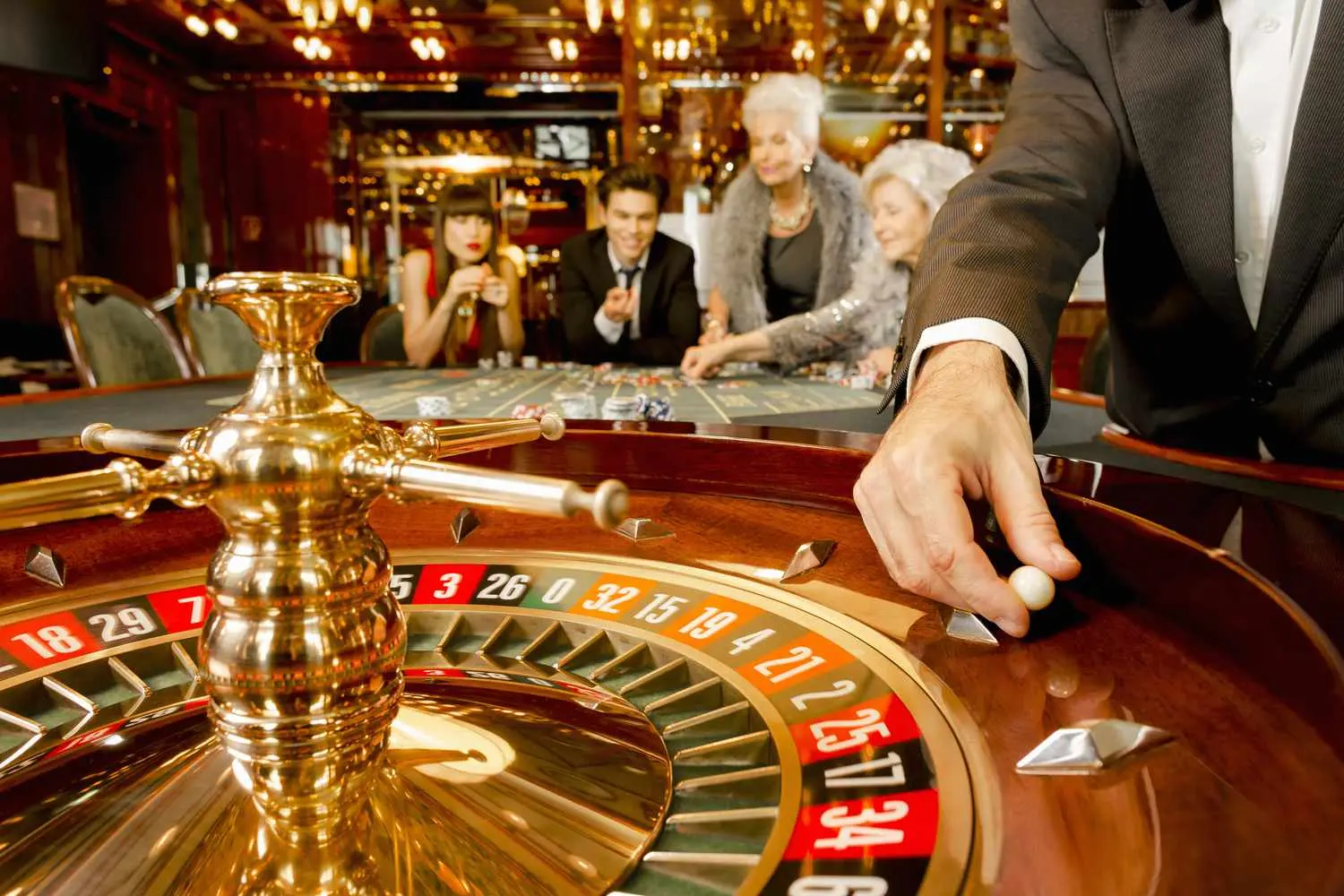
European roulette offers a cleaner setup with a single zero. Its house edge sits at 2.7 percent.
American roulette adds the double zero and pushes the edge up to 5.26 percent. That extra pocket quietly doubles the casino’s advantage, making European wheels far kinder to your bankroll.
Slots House Edge
Slots vary wildly. Some modern machines have a house edge of around 2 percent. Others creep well past 10 percent. The key difference is RTP. Higher RTP slots mean lower house edge and longer play sessions. Promotions like Slots Paradise Casino promotions can stretch your balance even further, but the built-in math of the slot still determines your long-term results.
Can Players Beat the House Edge?
You cannot erase the house edge. It is built into the rules. But you can manage how it affects you.
Smart players choose lower-edge games, learn basic strategy where applicable, and treat bonuses as bankroll extensions rather than magic solutions. The goal is not to fight the math. It is to work with it.
Longer sessions, smoother swings, and smarter decisions all come from understanding the edge you are playing against.
Why Knowing the Edge Changes How You Play
The moment you understand the house edge, gambling stops feeling random and starts feeling structured. You begin to recognize which games reward patience, which ones punish impulse, and where your money will actually last.
Instead of chasing losses blindly, you make deliberate choices. Instead of guessing where to play, you follow the math.
The house edge never disappears, but once you know where it lives, it no longer controls the game. You do.
Also Read-Why is Student Interest in Tech High?