
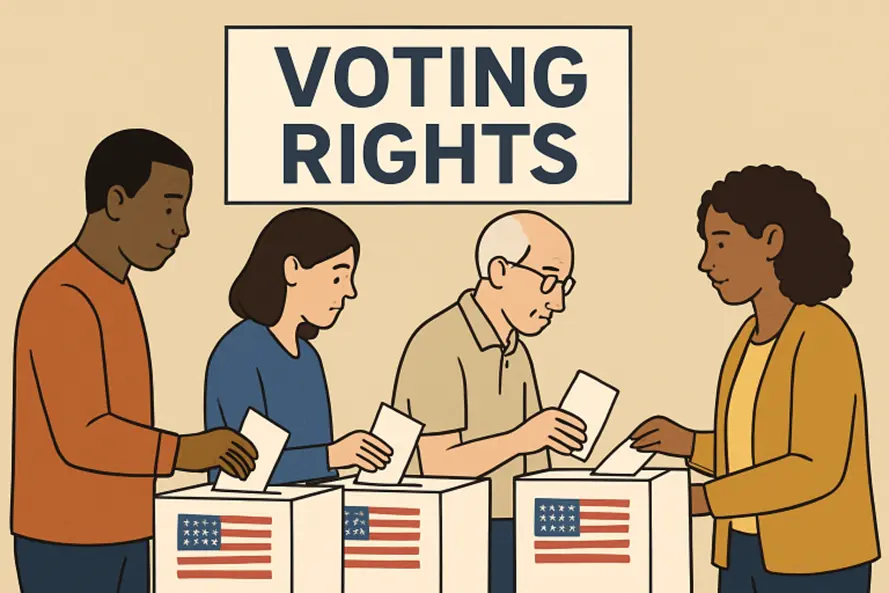
The Legacy of the Voting Rights Act of 1965
The Voting Rights Act of 1965 stands as a transformative moment in the nation’s history, marking a definitive federal response to the rampant racial discrimination that had long plagued American elections. Passed amid the height of the civil rights movement, the Act sought to make real the promises of the Fifteenth Amendment by eliminating state and local barriers—such as literacy tests and poll taxes—that had prevented marginalized communities from exercising their right to vote. This pivotal legislation helped enfranchise millions and continues to serve as a bulwark against discriminatory practices. Learn about Shelby County vs. Holder case to better understand a critical turning point in the ongoing battle over federal oversight of voting rights.
While the Voting Rights Act achieved significant successes, evolving tactics aimed at voter suppression have exposed new vulnerabilities. The Act’s core provisions, such as Section 5’s preclearance requirement, were designed to prevent states with histories of discrimination from enacting changes without federal approval. However, the legal landscape has shifted in recent years, rendering the continued effectiveness of these safeguards uncertain.
Recent Legislative Efforts to Reinforce Voting Protections
With threats to voting access becoming more nuanced, Congress has taken steps to renew and strengthen the legacy of the Voting Rights Act. Prominent among these efforts is the John R. Lewis Voting Rights Advancement Act of 2025, which proposes to restore key protections gutted by judicial decisions and reinforce the federal government’s role in overseeing changes to state election laws. The John Lewis Act is especially significant in light of the Supreme Court’s 2013 decision in Shelby County v. Holder, which struck down the preclearance formula and significantly weakened federal oversight—making the restoration of federal review all the more urgent. Legislative efforts like this are vital in ensuring every citizen can cast a ballot free from discrimination.
Support for federal reforms has been complemented by a surge of state-level initiatives addressing gaps left by national legislation. These measures underscore the importance of ongoing vigilance in safeguarding electoral integrity and demonstrate the adaptability necessary to counter evolving forms of voter suppression.
State-Level Initiatives: A Closer Look
Across the country, several states have taken significant steps to bolster voting rights protections, serving as laboratories of democracy. The Voting Rights Act of Virginia, enacted in 2021, stands out for its reintroduction of preclearance provisions at the state level, aiming to prevent discriminatory election changes before they take effect. This law also expands access to language assistance and disability accommodations, reinforcing the principle that all citizens are entitled to equal access to the ballot.
Similarly, New York has adopted the John R. Lewis Voting Rights Act of New York, which includes measures to root out voter discrimination and empower affected communities to challenge unjust policies. These efforts are critical as they address the patchwork nature of voting rights in America and demonstrate how states can serve as a backstop when federal protections are undermined. For a deeper dive into the landscape of state voting reforms and their impact, visit this Brennan Center analysis.
Ongoing Challenges and Judicial Scrutiny
Despite legislative and grassroots advancements, the struggle for robust voting rights protections continues in the courts. In recent years, the U.S. Supreme Court has narrowed the scope of federal voting rights protections, with decisions signaling a willingness to reconsider even Section 2 of the Voting Rights Act. Section 2 remains a critical tool, prohibiting voting practices that result in discrimination based on race or color. Still, its future is uncertain as legal challenges work their way through the judiciary.
Moreover, changing political attitudes at the state level have often resulted in restrictive voting legislation, including rules that limit absentee ballots, reduce early voting, or introduce cumbersome voter ID requirements. These policies risk disenfranchising historically marginalized groups, creating significant barriers for those already facing obstacles to participation. The American Civil Liberties Union provides updates on ongoing voter suppression efforts in the United States, which highlight how judicial rulings continue to shape the future of American democracy.
The Role of Civic Engagement in Protecting Voting Rights
The ultimate defense for voting rights lies in the hands of engaged and informed citizens. Civic participation—ranging from voting in every election to volunteering as poll workers and monitoring local election laws—amplifies the public’s voice in safeguarding democratic freedoms. Supporting nonpartisan organizations, joining local advocacy groups, and attending public hearings on election policies are powerful ways to ensure elected leaders are held accountable.
Informed citizens can advocate for reforms, challenge unjust practices, and ensure that voter suppression tactics do not eliminate hard-won gains. Grassroots action, when combined with legislative initiatives and judicial scrutiny, forms the three-pronged approach required to protect and extend voting rights in the 21st century.
Conclusion
Safeguarding the right to vote in the United States is an ongoing effort shaped by decades of legal battles, social movements, and civic engagement. Landmark victories, from the Voting Rights Act to landmark Supreme Court rulings, have expanded access to the ballot, yet challenges remain that require continued attention and action. Maintaining a truly inclusive democracy depends on coordinated efforts across federal, state, and local governments, supported by active citizen participation. By learning from historical struggles, identifying modern obstacles such as restrictive laws or misinformation, and fostering collective advocacy, Americans can protect and strengthen voting rights. Sustained vigilance, education, and engagement are crucial to ensuring that all citizens can exercise this fundamental right for generations to come.
Also Read-Why is Student Interest in Tech High?