
Designing and producing a booklet is about more than just eye-catching graphics and compelling content—how you bind your booklet can impact its usability, longevity, and first impression. From affordable options for small marketing handouts to professional solutions for detailed reports, your binding decision will ensure the finished piece is not just practical but polished. To make the most informed choice for your next project, it’s important to consider both functional and aesthetic criteria. For example, Printivity wire bound printing offers excellent durability and presentation, and it also provides convenient solutions for professional finishing.
Each binding method offers unique strengths and considerations that should match your project’s needs. Choosing the right one can determine how your booklet is received: will it open easily for quick reference, or maintain a crisp, corporate appearance on a boardroom table? With various options to suit everything from promotional brochures to instructional guides, it’s critical to align your selection with key factors such as page count, user experience, and budget.
Equally important is how the booklet will be handled—frequently referenced booklets may need to lie flat or withstand repeated flipping. In contrast, seasonal catalogs or special presentations might prioritize a more striking look and sturdiness. Exploring your binding options now can save you money on reprints or redesigns later, and ensure your final product has the lasting impact you intend.
By breaking down the most popular binding techniques, you’ll gain the clarity necessary to balance cost, durability, and style. Read on to find out which binding styles could be the best match for your booklet project.
Saddle Stitch Binding
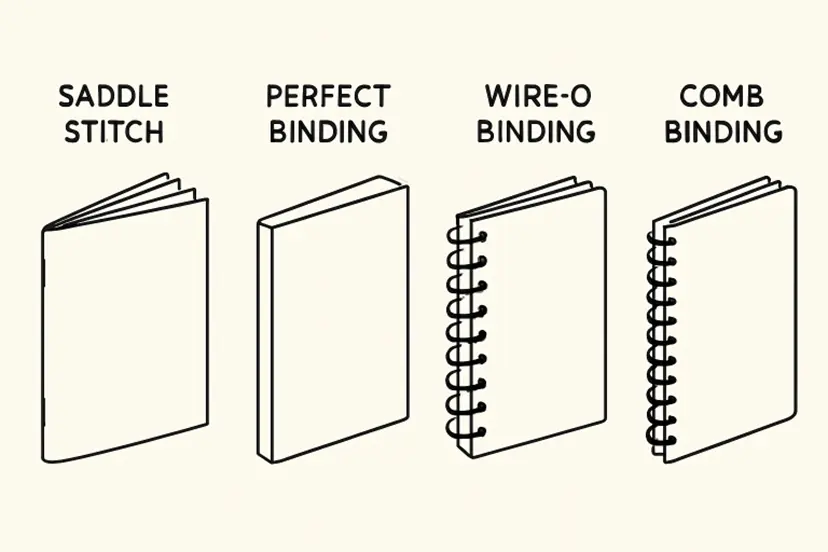
Saddle stitch binding is a popular and economical choice for booklets with a modest page count. In this method, folded sheets are nested within each other and stapled along the crease, forming a simple spine. Best for brochures, newsletters, or event programs under 64 pages, it provides a lightweight and sleek finish. One key limitation is the requirement for the page count to be divisible by four, so precision in planning is necessary to avoid wasted space or blank pages.
Perfect Binding
Perfect binding gives booklets a professional, square-edged spine, much like those found in paperback books. This method adheres individual sheets to a wraparound cover, making it ideal for annual reports, catalogs, and publications with 40 pages or more. Its main advantages are its ability to accommodate high page counts and the potential for spine printing, which is excellent for branding on library shelves. While its crisp look is attractive, perfect binding typically doesn’t lie flat when open and is more expensive than saddle stitching.
Spiral Binding
Also known as coil binding, spiral binding involves punching holes along the edge of the pages and threading a plastic or metal coil through them. The coil design allows pages to turn freely and lay completely flat, or even fold back on themselves, making it ideal for manuals, workbooks, and cookbooks that require frequent handling and note-taking. Spiral binding supports a broad range of page counts, but usually has a less formal appearance compared to perfect-bound options.
Wire-O Binding
Wire-O binding is a premium option similar to spiral binding, but it uses a sturdy double-loop wire that enhances durability and gives projects a polished, high-end finish. These books lie completely flat and can even accommodate half-turns, making them ideal for boardroom presentations, academic reports, workbooks, and planners. Professional wire binding services allow businesses to produce sleek, reliable publications across a wide range of thicknesses. The main trade-offs are the higher cost and slightly reduced availability compared to plastic spiral binding; however, many find the enhanced appearance and functionality well worth the investment.
Comb Binding
Comb binding utilizes a flexible plastic spine inserted into rectangular holes, enabling the booklet to be reopened and pages added or removed as needed. This is a go-to method for materials that are frequently updated, such as training manuals, instruction booklets, and policy documents. Comb binding is budget-friendly, although it is less durable and less visually refined than wire or perfect binding.
Thermal Binding
Thermal binding supplies a polished look by adhering loose pages to a pre-glued spine using heat. This approach is quick and creates a seamless, professional finish—ideal for business proposals, academic submissions, and presentations requiring a neat edge. Although thermal binding is fast and simple, it’s best suited for moderate-use booklets since frequent handling can weaken the glue over time.
Factors to Consider When Choosing a Binding Method
- Page Count: Each binding style is suited to specific page ranges. Saddle stitching is best for smaller booklets, while perfect binding, spiral binding, and wire binding accommodate higher volumes.
- Budget: Costs vary significantly; compare options to find the best quality for your available resources.
- Intended Use: Booklets that require lying flat or frequent updates may benefit from spiral, wire, or comb binding, while reports or catalogs may be more suitable for the aesthetics of perfect or thermal binding.
- Durability: Projects handled frequently should endure repeated opening—wire, spiral, and perfect binding offer greater resilience.
- Aesthetics: The finished look is essential. Perfect or thermal binding provides a sleek impression, while spiral and comb binding offer convenience for workbooks and manuals.
Conclusion
Choosing the correct binding ensures your booklet achieves its functional and visual goals, from user-friendly manuals to polished business publications. By weighing factors such as durability, presentation, usage, and cost, your binding style can elevate your project beyond basic expectations and leave a lasting impression on your audience. Taking the time to analyze your choices paves the way for booklets that are not only practical but also professional, effective, and enduring.